The Ayurvedic View of Food: Nourishment Beyond Nutrition
Ayurvedic nutrition, or ahara vijnana, is a fascinating area of study — in part because its perspective on food differs so greatly from the dominant Western approach.
In Ayurveda, there are three pillars of life: ahara (food), nidra (sleep), and brahmacharya (moderation and balanced living). Of these three, food is considered most essential because it is the primary form of medicine.
Food is not simply sustenance. It is prana — life force energy.
When we eat, the optimal outcome is for all bodily tissues (dhatus) to be nourished. Our bodies are in a constant cycle of repair and breakdown, and proper nourishment supports this ongoing renewal.
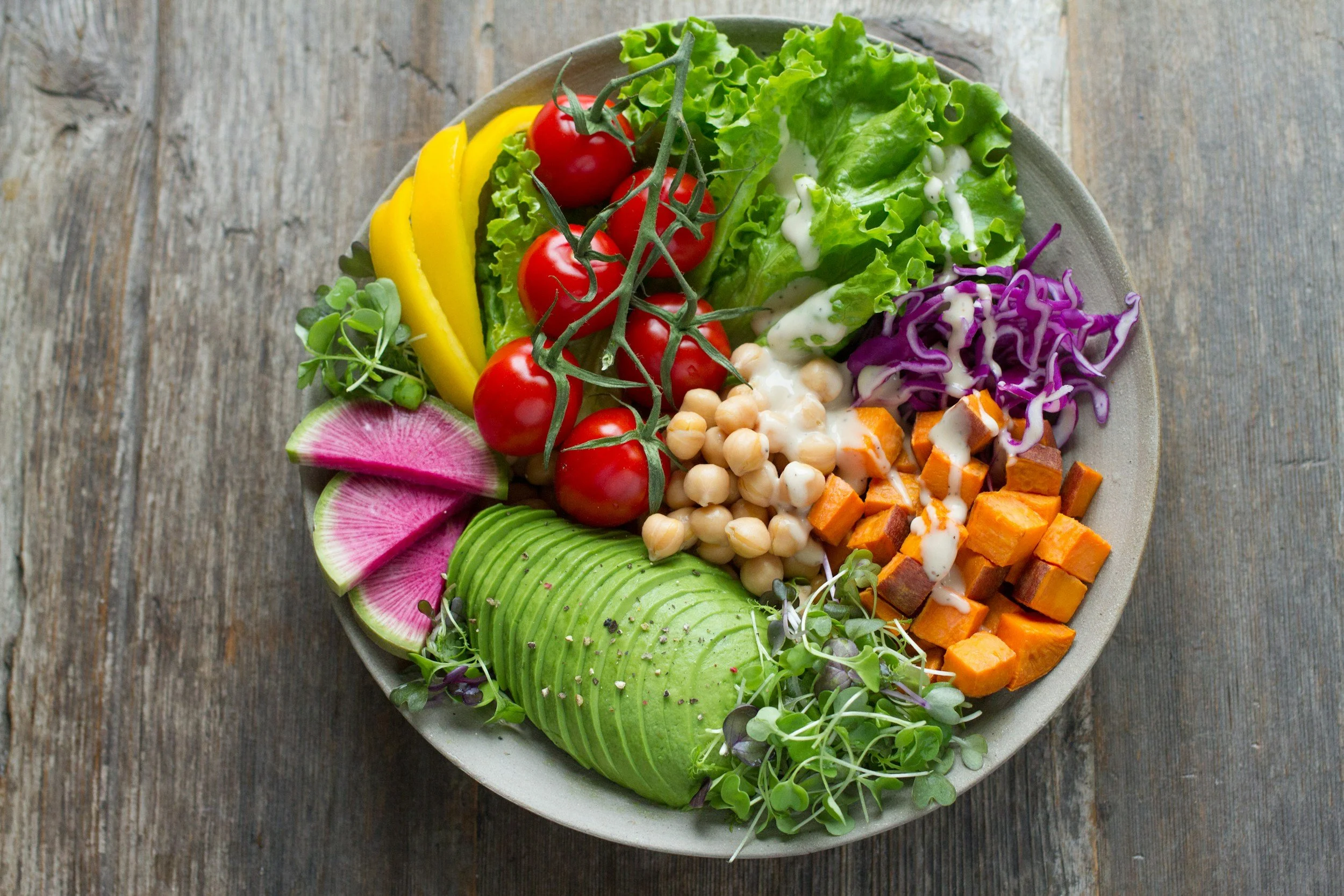
A bowl of fresh vegetables.
Food as Nourishment for Body, Mind, and Spirit
In Ayurveda, food nourishes not only the physical body but also the mind and spirit. There is a Sanskrit term for this understanding: purnabrahma, meaning that food is considered sacred and whole. Eating is therefore not merely a physical act — it is a ritual. Foods also carry energetic qualities. Food may be:
• Sattvic — balancing, clear, and harmonious
• Rajasic — stimulating and energizing
• Tamasic — heavy, dulling, and lethargy-producing
If we consistently consume tamasic foods, we may begin to experience heaviness, sluggishness, mental fog, or digestive stagnation such as constipation. Ayurveda teaches two key principles:
Like increases like.
Opposites bring balance.
When we cultivate awareness of how food affects us, we gain the power to make supportive adjustments.
Western Nutrition vs. Ayurvedic Understanding
In Western culture, eating is often driven by:
• Habit
• Personal preference
• Emotional states
• Body image concerns
• Nutritional calculations
We may focus on calories, macronutrients, or meeting specific dietary rules. Ayurveda offers a different lens. Rather than asking “What nutrients does this food contain?” Ayurveda asks:
How will this food be digested and assimilated?
In this tradition, we are not simply what we eat — we are what and how we digest. Ayurveda also recognizes the panca mahabhutas, or five great elements, present in all food. These elements influence whether a particular food supports balance or contributes to imbalance. As we learn about our individual constitution (prakriti) and our current state of imbalance (vikriti), we can choose foods that restore harmony. Balance in Ayurveda is therefore highly individualized and dynamic — changing with seasons, environment, age, stress levels, and life cycles. This nuanced approach may feel complex at first, but it is ultimately empowering.

An image from above showing windmills and green fields.
The Broader Meaning of Ahara
In Ayurveda, ahara extends beyond food. It refers to all forms of input we take into our system, including:
• Food and water
• Breath
• Emotional experiences
• Sensory impressions
• Information and media consumption
Everything we take in must be digested — physically, mentally, and emotionally. Even if someone eats nourishing meals, they may still experience imbalance if they are exposed to chronic stress, toxic relationships, environmental pollution, or overwhelming information. True nourishment therefore includes both what we eat and what we absorb through life itself.
A Gentle Invitation to Begin Observing
If you are curious to explore this perspective, a simple starting point is keeping a food journal.
Notice:
• What you eat
• When you eat
• How you feel before, during, and after meals
Approach this practice with curiosity rather than judgment. The goal is not to criticize yourself, but to gather awareness and deepen your relationship with your own experience.
Continuing the Conversation
If you would like to learn more, I will be hosting an upcoming in-person and virtual workshop on March 8th exploring this topic in depth. I also offer individualized Ayurvedic consultations for those seeking personalized guidance, and a small group immersion experience will be available soon. You’ve found this work for a reason, and I’m so glad you’re here.

Hand holding, a sign of gratitude, trust and support.