Embodying Ayurveda: Skin, Beauty & Ritual Care
Skin, Climate & Colorado Living
Okay listen, I have lived in Colorado for the bulk of my life. And the climate here is… arid. Dry, high, and intensely sunny.
I always assumed the skin experiences I’d had here — redness, burning easily, very dry skin, cracking cuticles, chapped lips, and honestly even achy joints — were simply what everyone experienced. But then I moved to Washington and suddenly… my hands didn’t look nearly as old. I wasn’t constantly reaching for sesame oil or homemade balms. I didn’t even need daily abhyanga.
But since moving back to Colorado last year, I’ve had to add these practices back into my life. Part of that is my own constitution — I tend to be more Vata-Pitta by nature. And honestly, the climate here is too. I’d describe Colorado as slightly imbalanced Vata-Pitta. The weather varies constantly, but the dryness and sun exposure remain consistent.
So what have I learned about skin care and beauty through years of studying Ayurveda?

The standard ‘welcome to Colorado’ sign.
What Ayurveda Says About Beauty
Ayurveda views beauty very differently than modern cosmetic culture.
“Roopam, gunam, vayastyag, iti shubhanga karanam.”
Ayurveda describes beauty as encompassing outer beauty, inner qualities, and lasting vitality. According to Ayurveda, there are three pillars of beauty:
Roopam is outer beauty — personified by shining, healthy hair and a clear, radiant complexion.
Gunam refers to inner beauty — the beauty that shines from within, characterized by warmth, kindness, innocence, and steadiness of mind and heart.
Vayastyag means lasting beauty — looking and feeling younger than one’s chronological age.
Ayurveda believes beauty is cultivated through balance within the mind and body.
At the moment of conception, something profound happened: we were created in our own unique, balanced state. This is known as our prakriti — our natural constitution. Nature organized us in a truly beautiful way. When we look at babies, we can often see the purity of that creation — soft skin, bright eyes, and an ease within the body.
As we age, experience stress, encounter toxins, move through hardship, consume improper foods, and live increasingly fast-paced lives, our skin reflects it. Ayurveda understands that skin is not separate from the rest of us. It mirrors what is happening internally — physically, emotionally, mentally, and environmentally.

Image of a scale, signifying the balance that Ayurveda teaches.
Skin as a Reflection of Inner Health
In the foundational Ayurvedic text, the Charaka Samhita, skin (twacha) is understood as a mirror of our inner world.
The Ayurvedic approach to skin care works from the inside out through two key components:
Ahara — what we take in through food, water, breath, and sensory impressions.
Vihara — our lifestyle practices, routines, behaviors, and environment.
Skin can be considered a barometer of health.
Our skin is alive. It breathes, feels, absorbs, and responds to loving care.
Isn’t that such a nourishing reflection?
Ayurveda understands that skin may express itself through different constitutional tendencies. These include Vata, Pitta, Kapha, or combinations of the three doshas. Let’s explore the qualities of each.
The Doshas & Skin Types
Vata Skin
Vata skin is governed by air and space. This skin type is often dry, thin, delicate, cool to the touch, and characterized by fine pores.
When balanced, Vata skin can appear light, delicate, and refined. When imbalanced, it may become excessively dry, rough, flaky, dull, or prematurely wrinkled. Depending on digestion and stress levels, the skin may also appear grayish or depleted.
This type may be more prone to dry eczema or fungal conditions. Mental stress — something commonly experienced with elevated Vata — can also leave the skin looking tired and lifeless.
For Vata skin, Ayurveda generally recommends:
warm, moist, nourishing foods
healthy oils and hydration
avoiding excessive dry or processed foods
warm teas and warm water
daily abhyanga
applying facial oil before bed
Pitta Skin
Pitta skin is primarily governed by fire with some water. This skin type is often soft, warm, sensitive, and medium in thickness.
When balanced, Pitta skin may appear radiant, rosy, and bright. When imbalanced, it may tend toward redness, inflammation, rosacea, acne, rashes, pigmentation, freckles, or sun sensitivity.
Because Pitta is governed by heat, this dosha is often the most reactive to sun exposure and excessive heat. Emotional stressors such as frustration, resentment, or anger may also show up visibly in the skin.
For Pitta skin, Ayurveda generally recommends:
avoiding excessive sun and heat
favoring cooling foods and herbs
limiting spicy foods
avoiding overly synthetic products
incorporating calming and cooling practices
Kapha Skin
Kapha skin is governed by earth and water. This skin type is often thicker, softer, cooler, oilier, and naturally well-hydrated.
Because of Kapha’s water and earth qualities, this skin type often ages slowly and tends to maintain elasticity and collagen well over time.
When imbalanced, Kapha skin may experience:
excessive oil production
enlarged pores
blackheads or pimples
moist eczema
puffiness or swelling
fungal tendencies
For Kapha skin, Ayurveda generally recommends:
lighter foods
limiting greasy or overly heavy foods
daily movement and circulation
warming therapies
oil-balancing practices
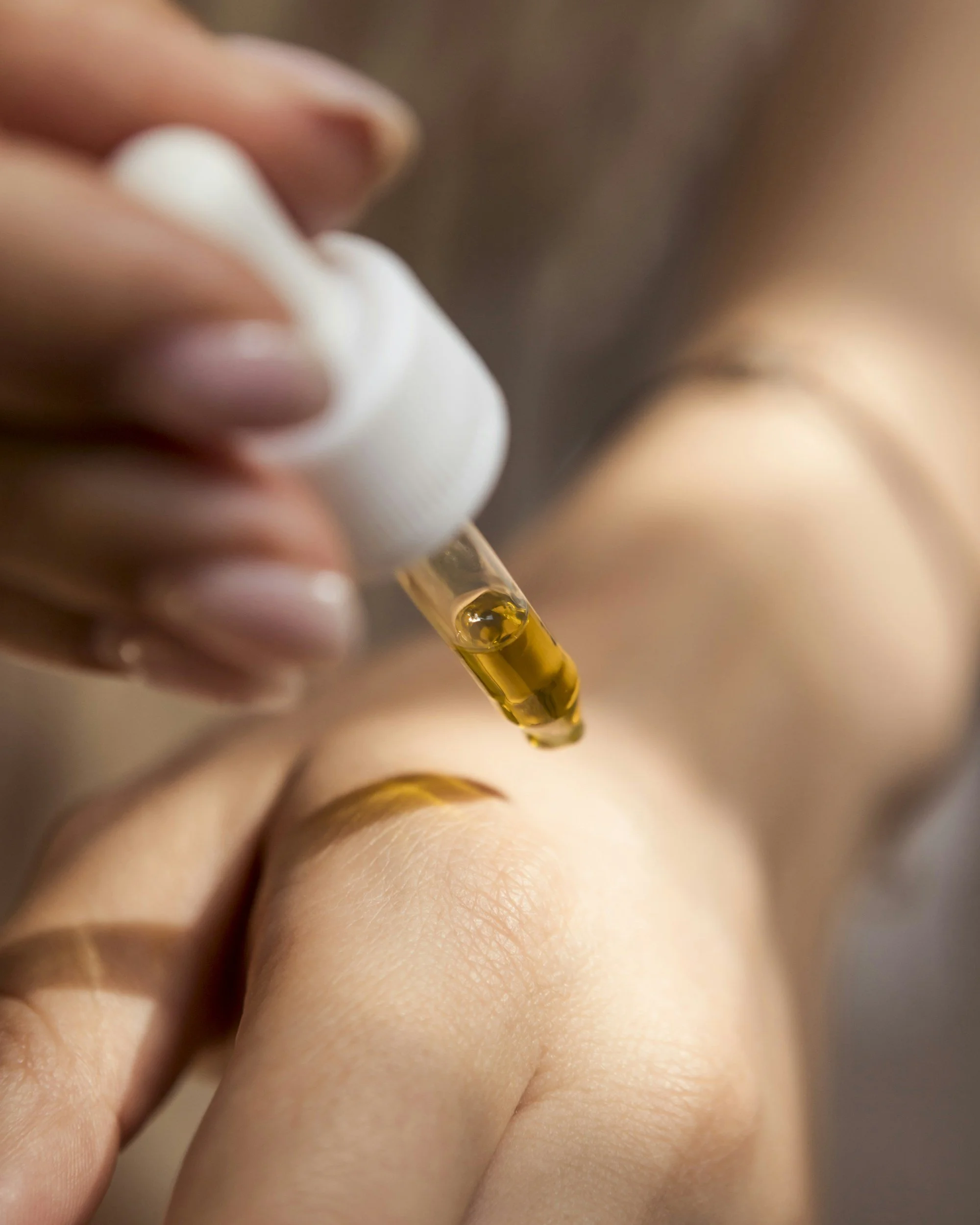
An image of someone dropping oil onto their skin.
General Ayurvedic Practices for Healthy Skin
Regardless of skin type, Ayurveda offers a few foundational practices for supporting healthy skin:
Live in rhythm with nature. Winter is a time for deep nourishment, spring can support detoxification, and summer is a time for protection and cooling.
As best as you can, if you can’t eat it, don’t put it on your skin.
Favor warm, cooked meals made from whole foods.
Avoid excessive iced or cold foods and drinks, which can dampen digestion.
Consider incorporating regular abhyanga (warm oil massage) into your routine to support circulation, the nervous system, and skin nourishment.
Prioritize rest and sleep whenever possible.
Stress impacts everything — including our skin. Developing practices that help regulate the nervous system can deeply support overall radiance and vitality.
Experiment with simple homemade skin care rituals. Not everything needs to come from an expensive bottle or elaborate routine.
My Own Skin Care Rituals
Depending on your age, stress levels, environment, and climate, you may notice shifts in your skin over time. Personally, I tend toward more Vata-Pitta skin — thinner, dry, sensitive, and easily reddened.
Here are a few of my own go-to rituals for supporting my skin:
I practice daily abhyanga using Dhanwantharam and Mahanarayan oil. I apply the oil over my whole body, complete my morning practices — breathwork, chanting, and gentle back stretching — and then shower afterward.
If I know I’ll be out in the sun for much of the day (coaching tennis, hiking, or kayaking), I apply sunscreen. Badger brand has been one of my favorites because the ingredients are simple and it feels gentle on my sensitive skin. I also wear giant hats whenever possible — whether that’s a baseball cap or an oversized floppy sunhat.
At night, I’ll often mix licorice powder, honey, and water into a gentle face mask. After rinsing, I apply Kumkumadi oil and massage my face in upward strokes.
If my eyes need a little extra love, I’ll spray cotton pads with rose water and place them over my eyelids while doing Yoga Nidra before bed.
None of these rituals are about perfection.
They are simply ways of caring for myself.
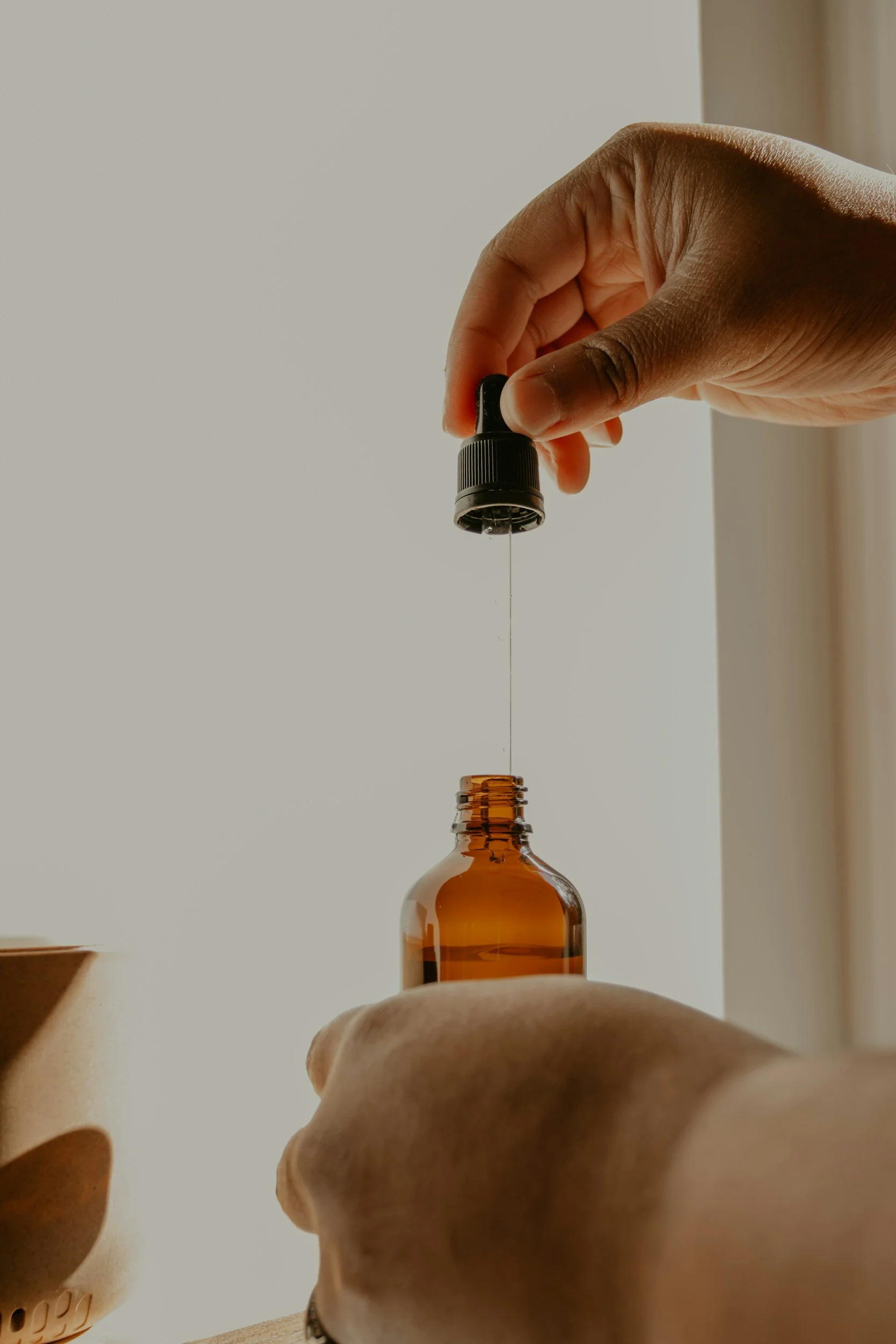
Someone about to apply oil for themselves.
A Different Relationship With Beauty
Beauty is less about contouring or perfectly matching makeup to our skin (though if you love those things, that’s okay too!) and more about how we nourish, love, and care for ourselves — inside and out.
Ayurveda invites us to slow down. To develop rituals that support us day to day. To care for ourselves with consistency and tenderness.
And perhaps most importantly, it reminds us that beauty is not something we have to force or chase.
It is something we uncover when we return to balance.
Maybe she’s born with it. Maybe it’s licorice powder and honey applied 5x a week